



What The Price of Coffee in Your City Tells Us
At first glance, the price of a coffee might seem trivial. But when tracked consistently across global cities, it becomes a useful and relatable indicator of discretionary spending and cost-of-living pressures.
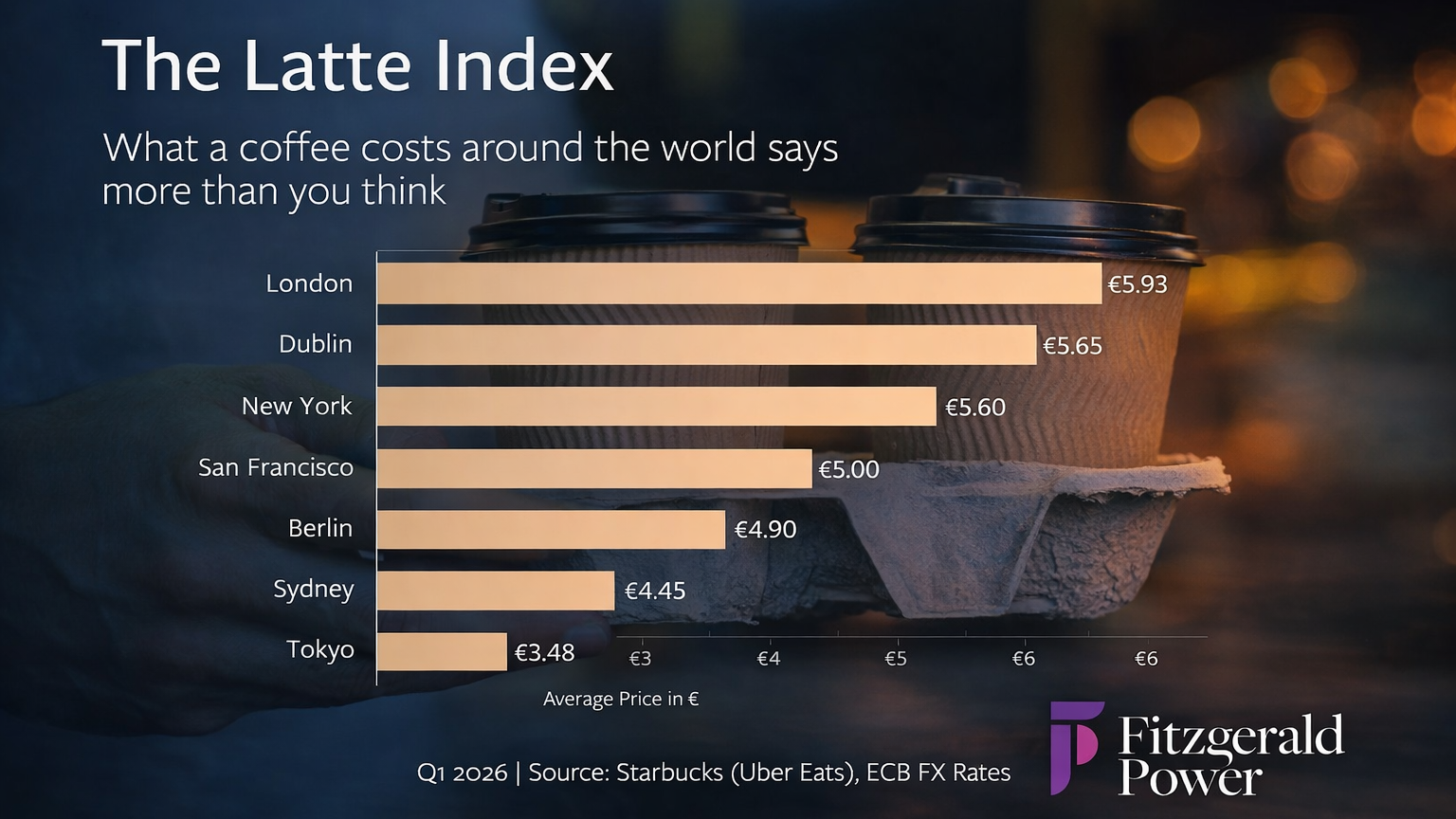
Introducing the Latte Index: Fitzgerald Power’s quarterly snapshot of the price of a standard Starbucks latte across key international cities, converted into euro using ECB exchange rates.
While simple in concept, the index offers a lens into broader economic dynamics: wage levels, rent pressures, currency movements, and, importantly, consumer tolerance for rising prices.
Q1 2026 Snapshot
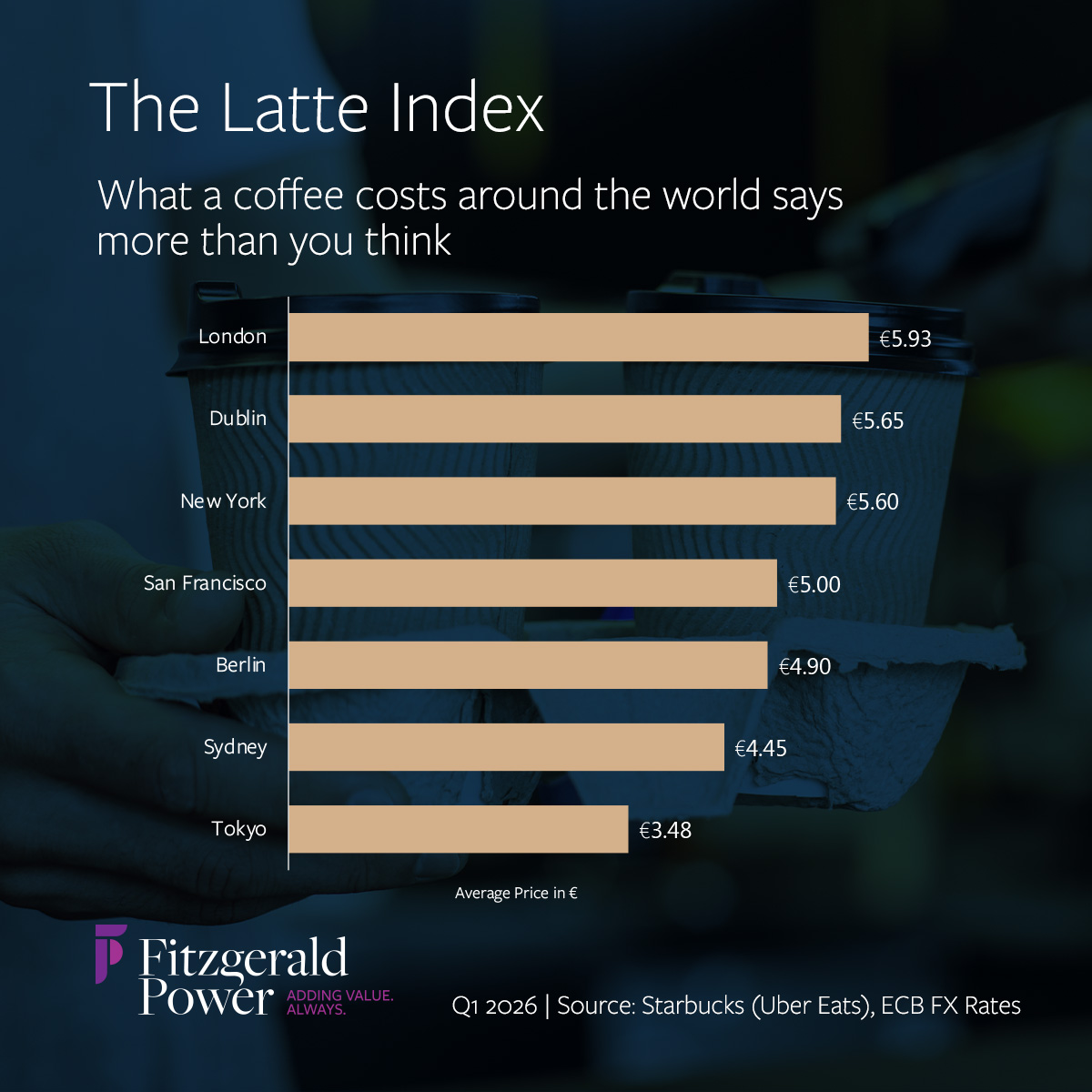
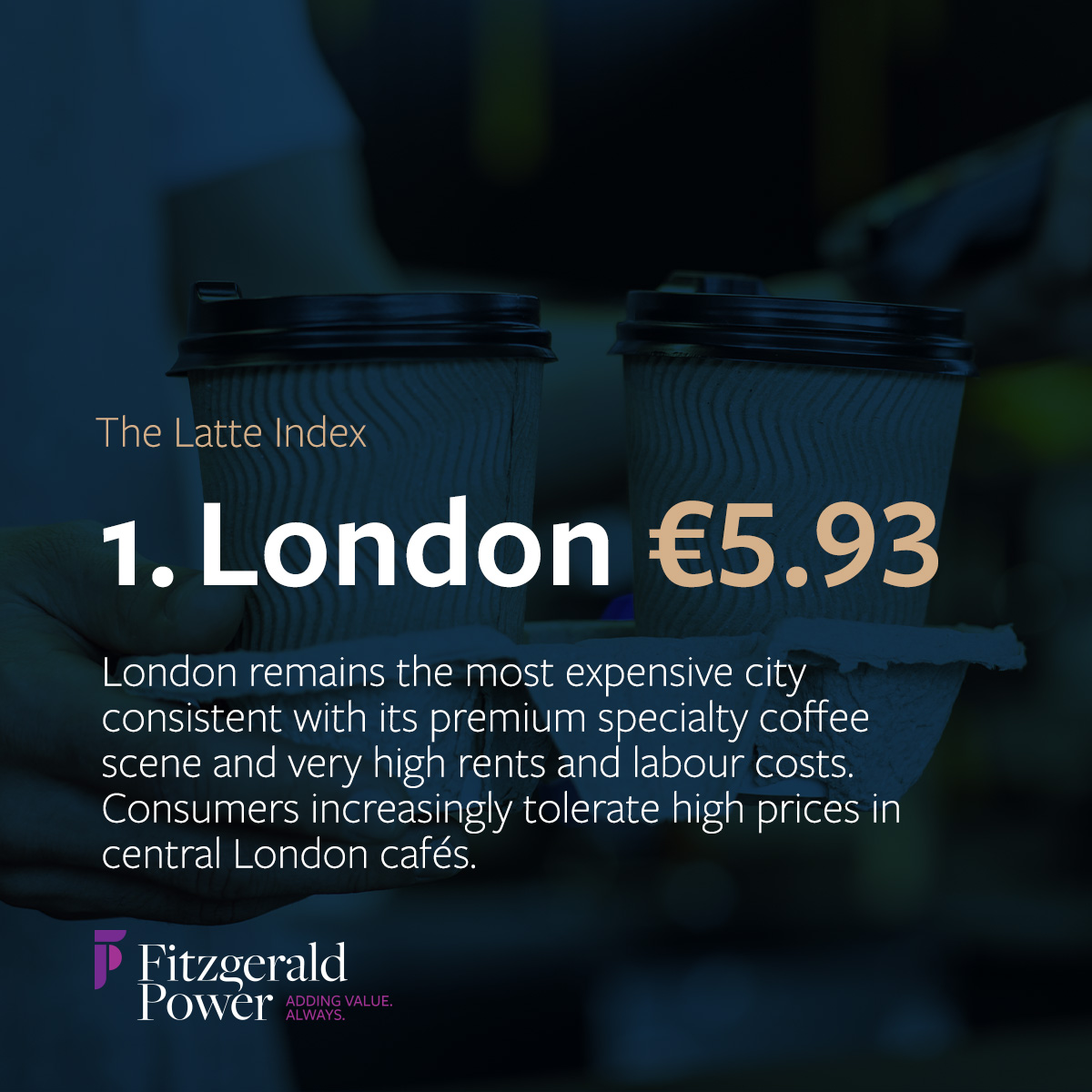
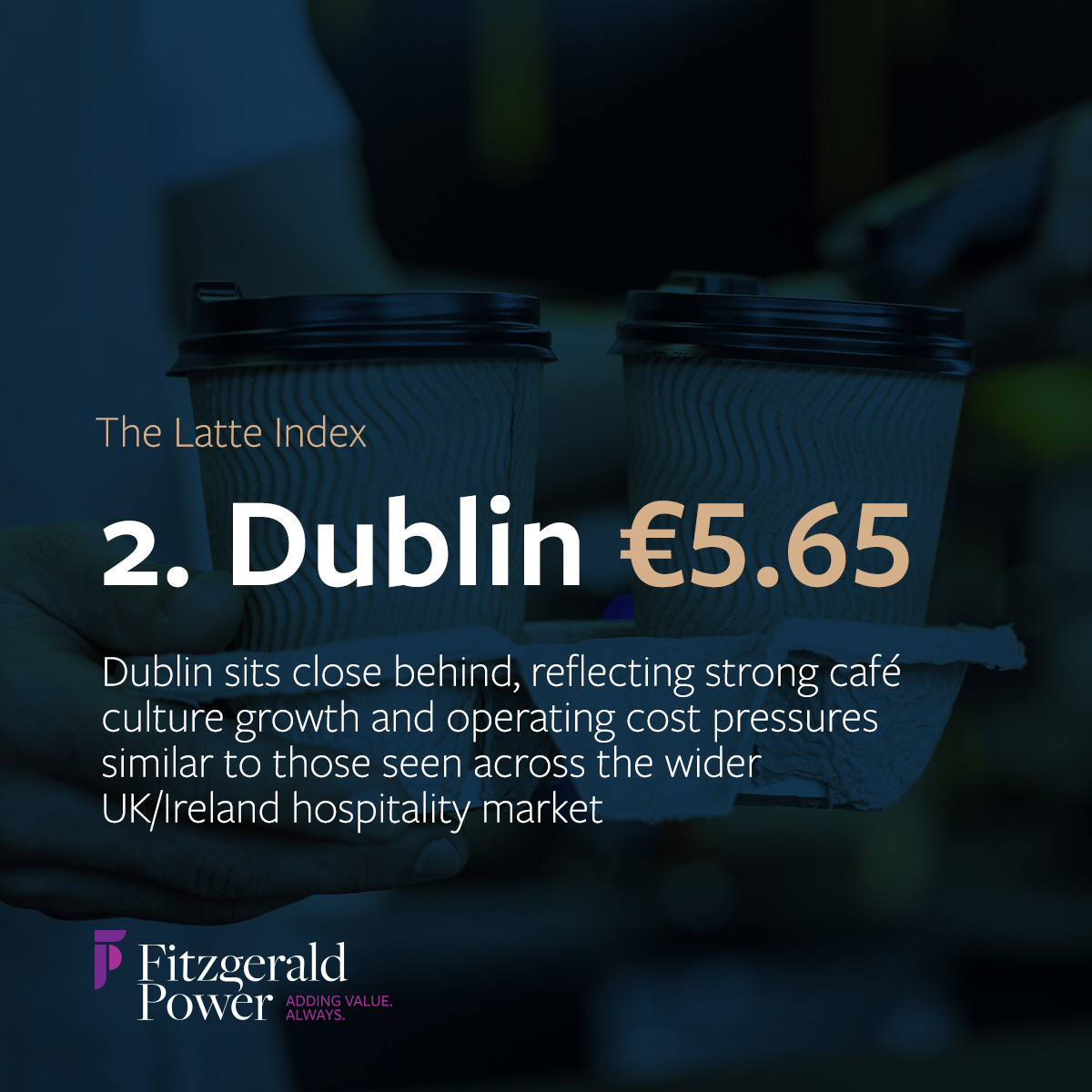
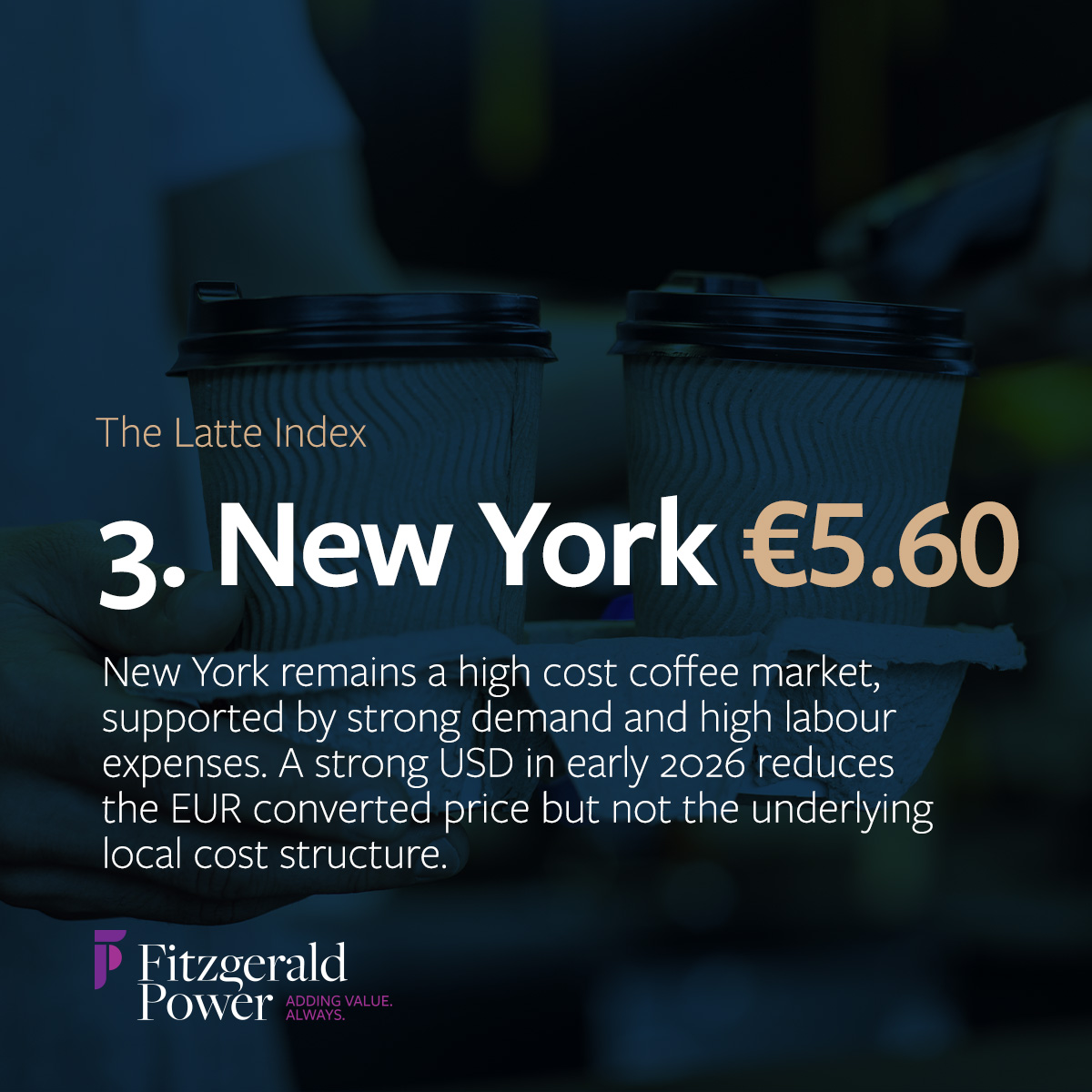
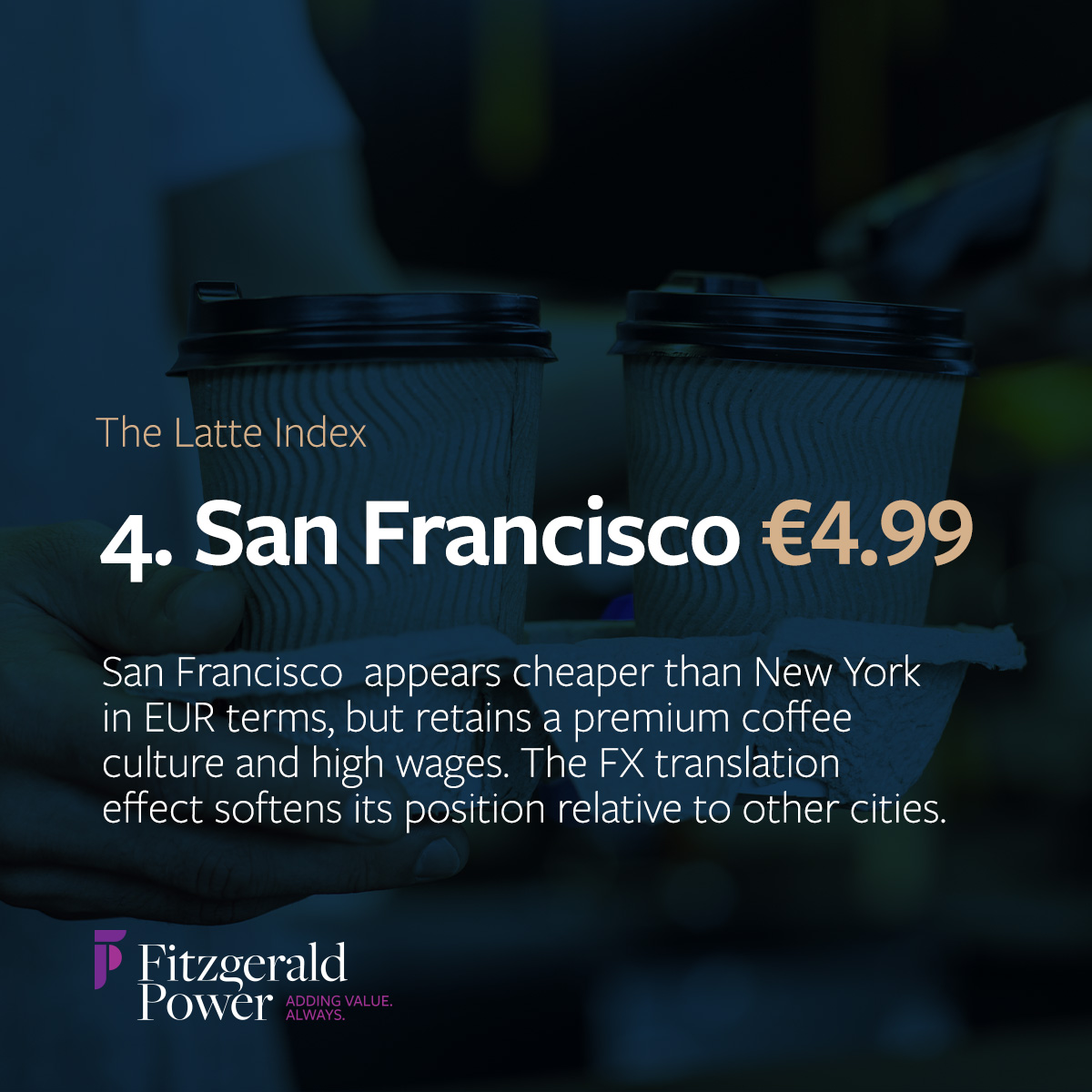
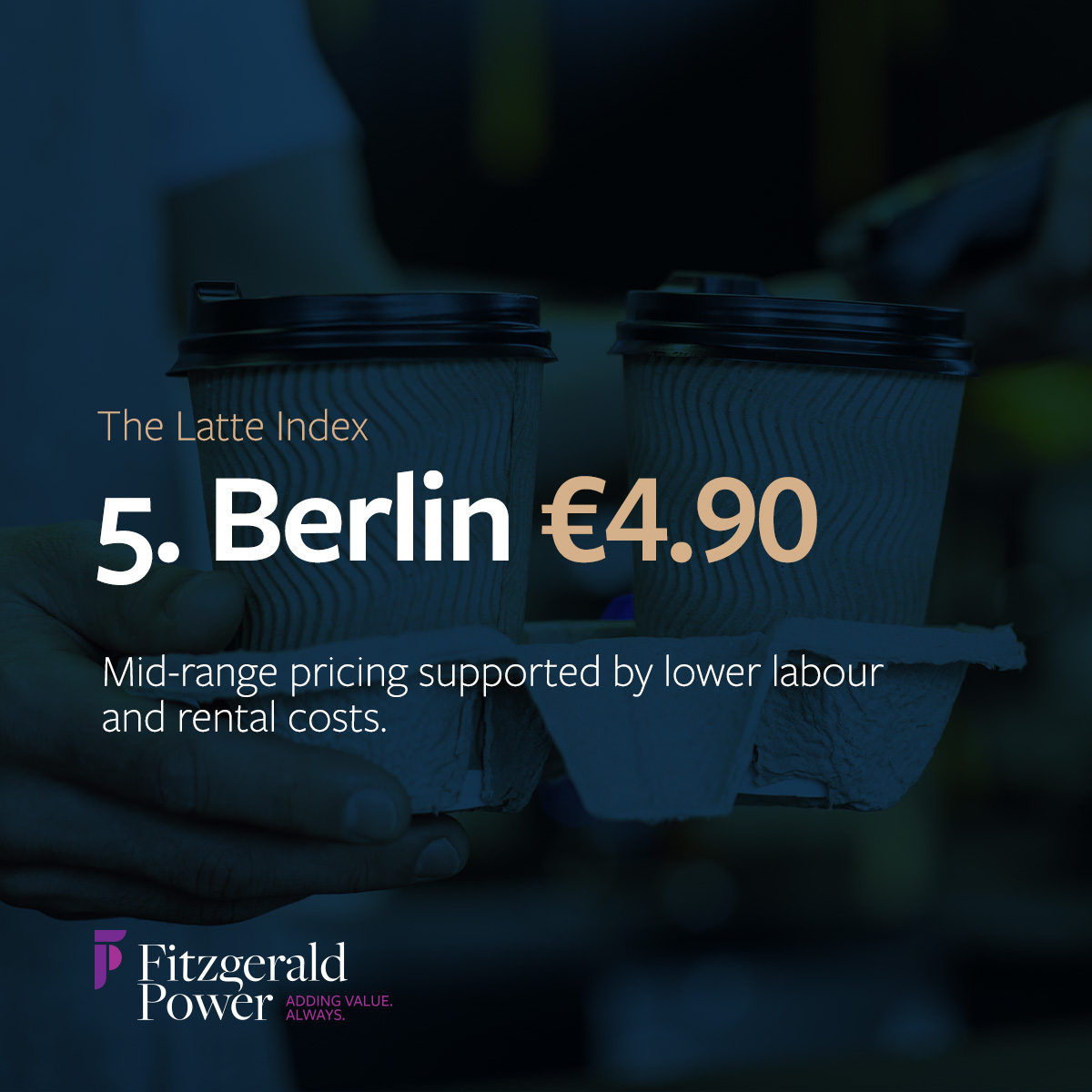
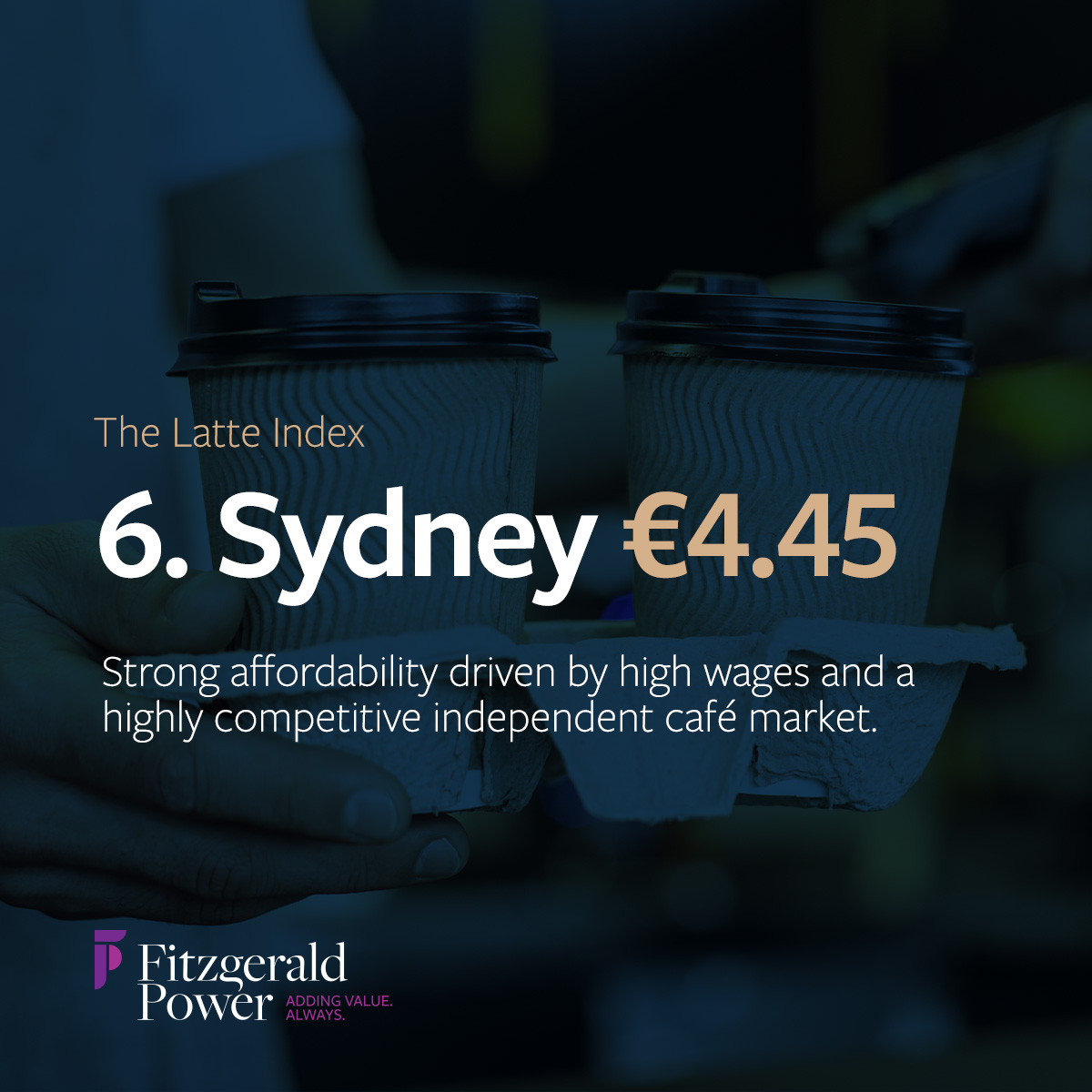
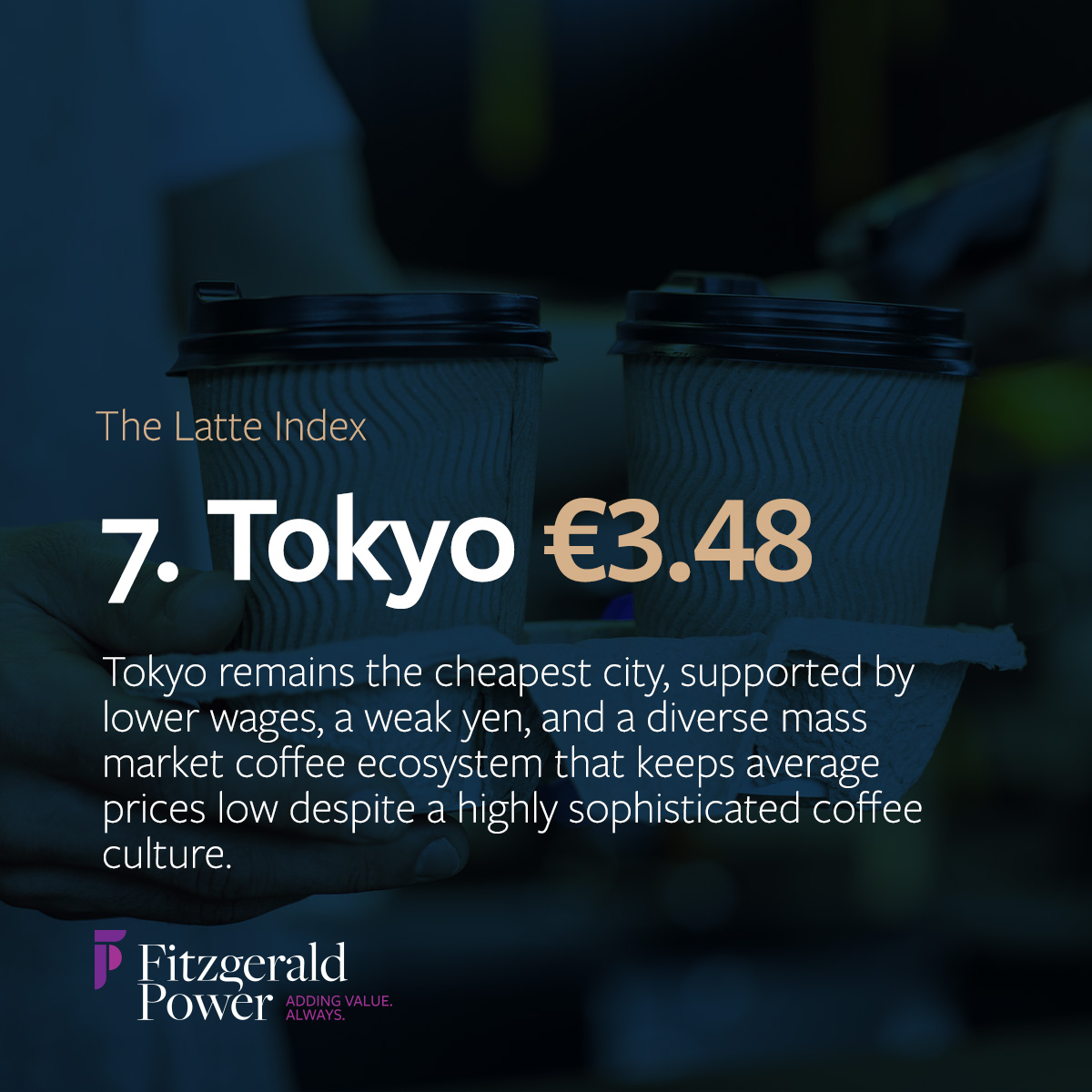
In Q1 2026, London ranks as the most expensive city for a latte at €5.93, followed closely by Dublin (€5.65) and New York (€5.60). At the other end of the spectrum, Tokyo remains significantly more affordable at €3.48.
This spread highlights more than just pricing differences, it reflects structural cost variations across economies.
Dublin: Converging with High-Cost Cities
Dublin’s position is particularly notable.
Despite being a smaller market than London or New York, Dublin’s latte price sits firmly within the top tier. This suggests that cost pressures in the Irish economy are aligning with those seen in larger global cities.
Key drivers include:
- Persistently high commercial rents
- Rising wage expectations in hospitality
- Strong urban demand supporting premium pricing
In effect, Dublin is behaving like a high-cost global city — without necessarily having the same scale advantages.
The Role of Currency and Local Cost Structures
Currency movements also play a role.
For example, New York appears marginally cheaper than Dublin in euro terms, partly due to exchange rate effects. However, underlying local costs, particularly labour, remain high.
Similarly, Tokyo’s lower price point reflects both a weaker yen and a fundamentally different cost structure, where wages and rents remain comparatively subdued.
Consumer Behaviour: A Tipping Point?
Perhaps the most important insight from the Latte Index is not the price itself, but what it signals about consumer behaviour.
Across many developed economies, consumers have absorbed sustained increases in everyday costs — from coffee to energy. However, there are signs that this tolerance is being tested.
Recent protests linked to rising living costs and energy prices highlight a growing sensitivity to affordability. While a latte is a small discretionary purchase, it sits within a broader basket of spending that households are increasingly scrutinising.
The question is no longer whether prices can rise, but how far they can rise before behaviour changes.
Why It Matters
The Latte Index is not intended to be a definitive economic measure. Rather, it complements traditional indicators by grounding macroeconomic trends in something tangible and widely understood.
It provides:
- A relatable benchmark for discretionary spending.
- A comparative view across international markets.
- An early signal of pressure points in consumer affordability.
Looking Ahead
Fitzgerald Power will track the Latte Index on a quarterly basis, building a clearer picture of how consumer prices evolve over time — and what that means for businesses operating in Ireland and beyond.
Because sometimes, the most meaningful economic insights aren’t found in complex models…
…but in the price of your morning coffee.