



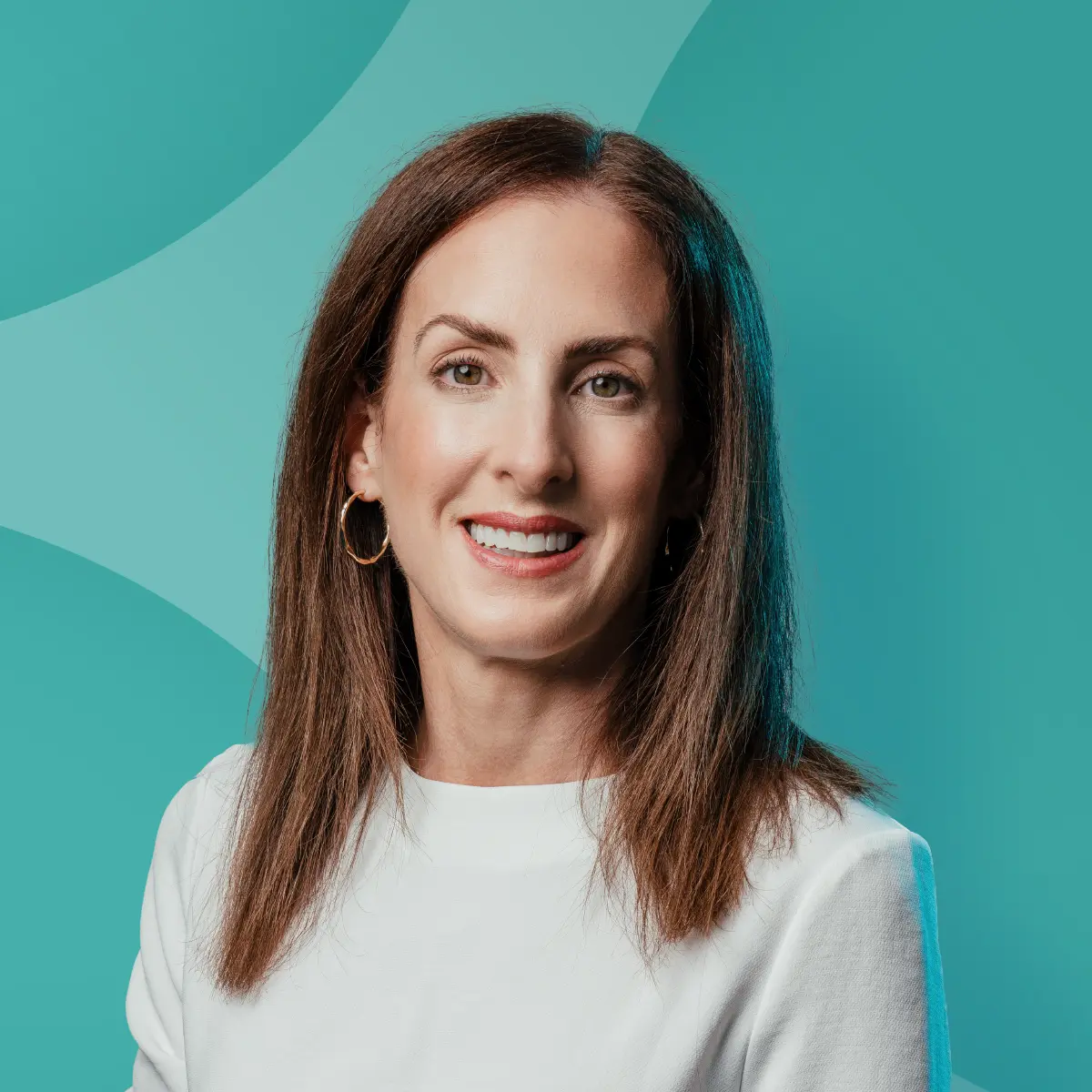
Expertly Put is a series of exclusive conversations with industry experts, designed to help business owners and management teams gain a deeper understanding of the topics that matter most. In this edition, I sat down with Amy Neale, General Partner at Delta Partners, Ireland’s leading venture capital firm, to discuss all things Venture Capital. Or for those with skin in the game, VC.
With a three-decade track record of backing visionary founders, Delta is where Amy leads investments in early-stage companies across diverse sectors and champions entrepreneurs who are shaping the future and building high-impact businesses. She serves on several startup boards and is a vocal advocate for a more inclusive tech ecosystem. In a previous life, she was Senior Vice President at Mastercard, where she led the global fintech team and founded the award-winning Start Path programme. Originally from the UK, and now based in Dublin, she has over two decades of experience in technology and venture investing and holds a PhD in Computational Linguistics.
I began by asking the basics.
Jennifer Power (JP):
Thanks for joining me today, Amy. For those who might not know, what exactly is venture capital, and how does it differ from other funding types like angel investment or bank finance?
Amy Neale (AN):
Venture capital (VC) can seem like a black box, so it’s useful to explain the business model. We raise funds from investors who want a small portion of their portfolio in a high-risk, high-return asset class, for example, promising technology companies. We then put that money to work across a portfolio of around 20–30 companies with the potential for very high returns. But only a small proportion will deliver those outsized returns. The returns come only when we achieve an exit — through a trade sale or IPO.
Most importantly, investors gain access to opportunities they wouldn’t typically reach themselves — from global sovereign wealth funds and government agencies to pension funds, family offices, and successful entrepreneurs.
JP:
How does a founder know if VC is right for them, and if a VC is the right fit?
AN:
Founders need to ask two key questions. The first is, “Is this the type of business VCs back?” VC-backable companies target large global markets and build strategically significant technology that could be acquired or listed. Many brilliant businesses aren’t suited to VC, simply because their market isn’t big enough. The second is, “Am I comfortable having co-owners?” Taking VC means selling equity, meaning you no longer own 100% of the business. You’re bringing in partners aligned to a long-term exit outcome. Even in early conversations, we discuss where the company could go and potential exit paths.
JP:
And obviously, the founders need to be aligned with the VC that you are moving to this event at the end of the term, whether it be exit or IPO; everybody must be very clear, I imagine?
AN:
Absolutely. And you know, there are different types of venture capital investors at different points along the journey. At Delta, we focus on early-stage investment, pre-seed, seed, and Series A. This is the phase where founders are building their product, securing their first reference customers, achieving product–market fit, and starting to shape what the business could look like at scale.
Even at this early stage, we’re having conversations with founders about the long-term potential of their company and where future exit opportunities might arise. For venture-backable businesses, it’s never too early to think about this.
JP:
From your experience and with Delta, are there specific sectors or industries that you focus on, or are you agnostic to that?
AN:
We are primarily focused on the Irish market. While we can invest internationally, most of this fund is dedicated to Ireland. We believe that to be a successful early-stage investor in the Irish ecosystem, you need to take a generalist approach, looking across sectors and segments.
Our focus is on backing outstanding teams and allowing them to define the problems they want to solve. That said, at Delta, our strong preference is for B2B technology. This is where we spend most of our time: supporting companies developing technologically innovative solutions where the end customer is another business.
JP:
Let’s talk about the investment process. Could you give us some insights on how it works from pitch to funding?
AN:
As a VC investor, I have a few key responsibilities. The first is to find fantastic founders who are building great businesses with big visions. I make it my mission to be everywhere and meet as many founders as I can. Most VC funds in the Irish market operate similarly, so as a founder, you’re likely to come across investors through the networks you’re building yourself, which is hugely important. So, it typically starts long before you’re actively fundraising. That first connection might be a coffee six months earlier. When the founder is ready to raise, we’ll meet and review a pitch deck that explains the problem, the solution, why the market is large, and what early traction looks like. We then move into due diligence, researching the market, speaking with customers, reviewing metrics and modelling scenarios. If everything holds up, we issue a term sheet, summarising key deal terms. Timing varies hugely; it can be very fast if the fit is strong or if there’s competition for the deal.
JP:
What mistakes do founders commonly make in their pitch decks?
AN:
So, I always think that when I’m reviewing a pitch deck for the first time, I need two takeaways. “What do you do?” And, “Why should I care?” Founders often overcomplicate the explanation of what they do. Make it so simple that your grandfather would understand! We see hundreds of companies, so we must quickly understand what map we’re on.
Then show why it matters: a big, uncapped market with real change happening and customers ready to buy globally.
JP:
And obviously, that global expansion piece is critical to that bit.
AN:
Absolutely, Ireland is not a big enough market for the types of exits that we’re trying to direct ourselves towards
JP:
What should founders understand about a term sheet?
AN:
A term sheet does two things. It defines the deal, the investment amount (and expected total round size), valuation and resulting equity ownership. It also defines governance going forward, which covers board composition, decisions requiring investor involvement, information rights, and employee option pool expectations. Getting alignment early avoids expensive legal work later. Some clauses cover unlikely but important “nuclear scenarios.” We want clarity so that once signed, we can all get back to building the company.
JP:
Once VC money is in the business, how do things change?
AN:
Day-to-day operations shouldn’t change dramatically; execution against the agreed plan is key. But when challenges arise, there’s a wider set of stakeholders to help strategise. We typically join the board and act as a sounding board, bringing experience from many companies. CEOs can sometimes feel alone; we provide supportive but honest challenge. It’s not giving up control — it’s gaining partners in success.
JP:
How early in the journey do you start speaking to the founders about exit plans? Is that something that you’re talking about from day one, or is it more of a let’s-see-how-it-goes?
AN:
We ensure alignment before investing, but we don’t constantly discuss exits. In the early years, success comes from commercial progress — customers, product proof points, market positioning. Smart founders keep potential acquirers aware of them, but weekly exit talk isn’t helpful.
JP:
And if projections aren’t being met, what happens?
AN:
Startups rarely follow the plan exactly. We may support follow-on funding if there are good signals, customer traction, strong pipeline progress, or meaningful product milestones. At times, companies must make tough choices to extend their runway. Our reserves exist so we can add fuel when momentum is real.
JP:
If a founder expects to raise VC investment in 12–18 months, what should they do now?
AN:
Build relationships with VCs and the wider ecosystem: Enterprise Ireland, professional advisors, accelerators, incubators, and university spin-out teams. Ireland is a small, well-connected network – use that. And build the business. Engage in deep customer understanding, tangible product progress and early validation of sales motion. We need to see the ability to take something from concept to reality.
JP:
Final question: What’s the one thing you wish every founder knew before entering the world of VC?
AN:
It’s a long-term relationship. You’ll speak with your investor monthly, if not more, for 5–8 years. Make sure it’s someone you trust, someone you’d feel comfortable calling when things go wrong on a trip to the West Coast. We fall in love with the companies we invest in. We take time to decide because we want to know we can work well together.
Jennifer Power:
Amy, thank you so much. You’ve truly demystified all things VC.
Located on Stephen’s Green, Delta Partners helps Ireland’s entrepreneurs to ensure solid foundations at the early stages of business building. To find out more about them, or Amy, you can visit their website here.