



What your morning coffee says about the economy
Every quarter we’re inundated with economic data. Inflation. Interest rates. GDP. Consumer confidence.
They’re all essential measures of economic health, but they don’t always tell us how those trends are being felt in everyday life. So, we decided to start somewhere a little more familiar.
The price of a Monday morning latte.
Welcome to the Fitzgerald Power Latte Index.
Each quarter, we’ll track the cost of a standard Starbucks Tall Latte across seven major global cities. It’s our own light-hearted take on the famous Big Mac Index – but beneath the foam is a surprisingly useful snapshot of consumer prices, operating costs and inflationary pressure.
No, we’re not suggesting the European Central Bank swaps inflation reports for flat whites. But sometimes the smallest purchases tell us the biggest stories.
Q2 2026: The Story Isn’t Higher Prices – It’s That They Haven’t Fallen
The headline this quarter isn’t another surge in prices. It’s something arguably more interesting. Despite signs that wholesale coffee markets have begun to stabilise after two years of volatility, consumers are seeing very little relief when they reach the till.
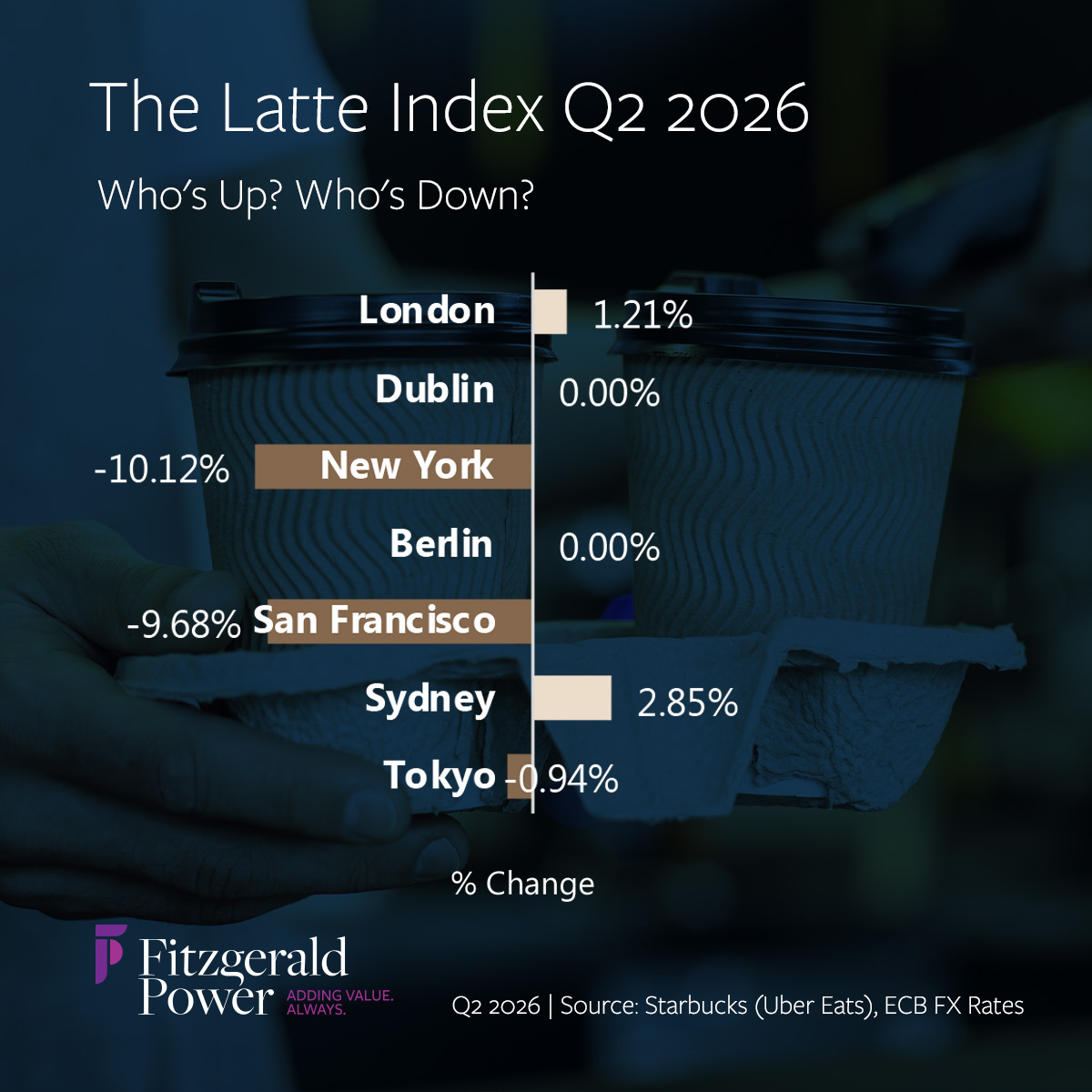
Across the seven cities in our index, prices barely moved.
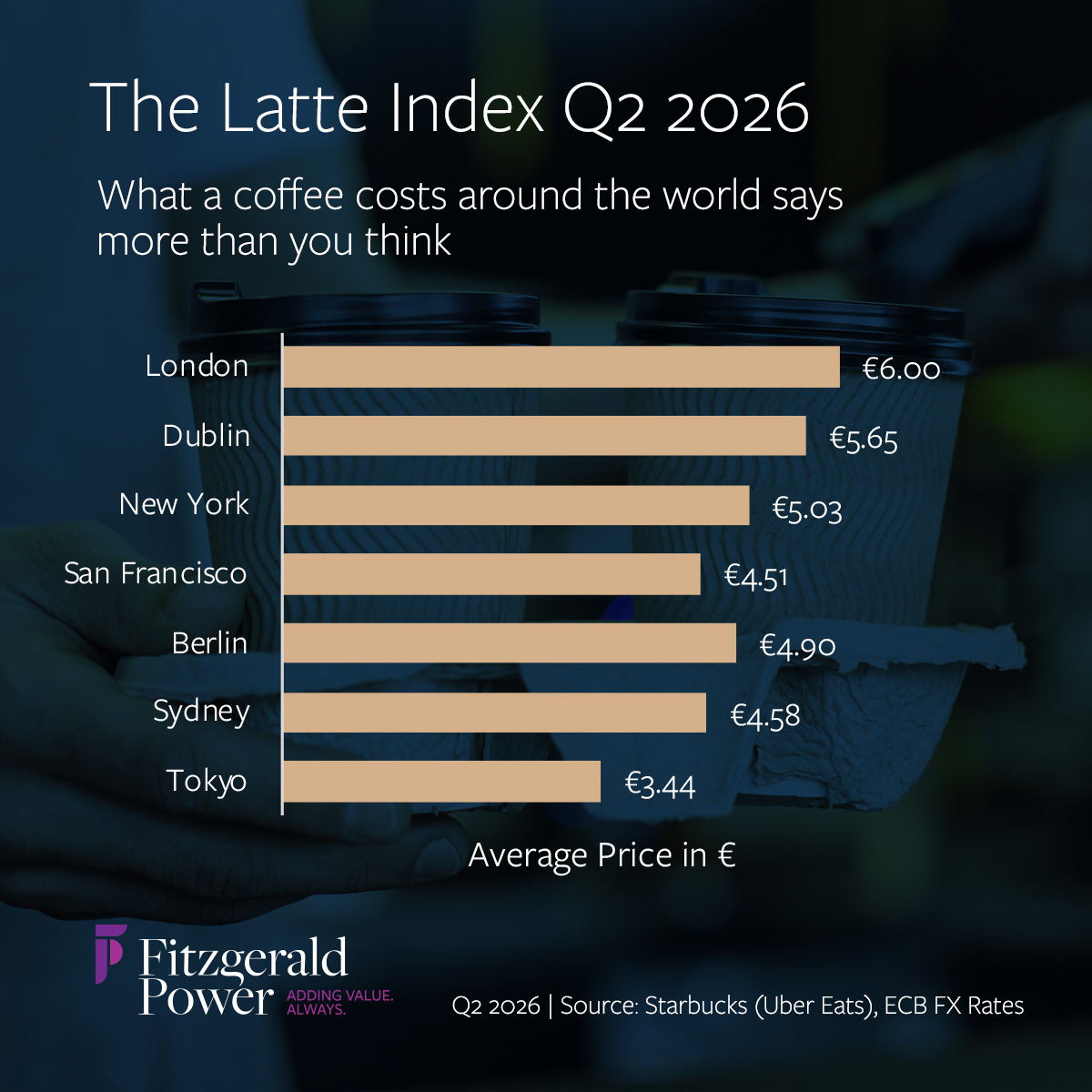
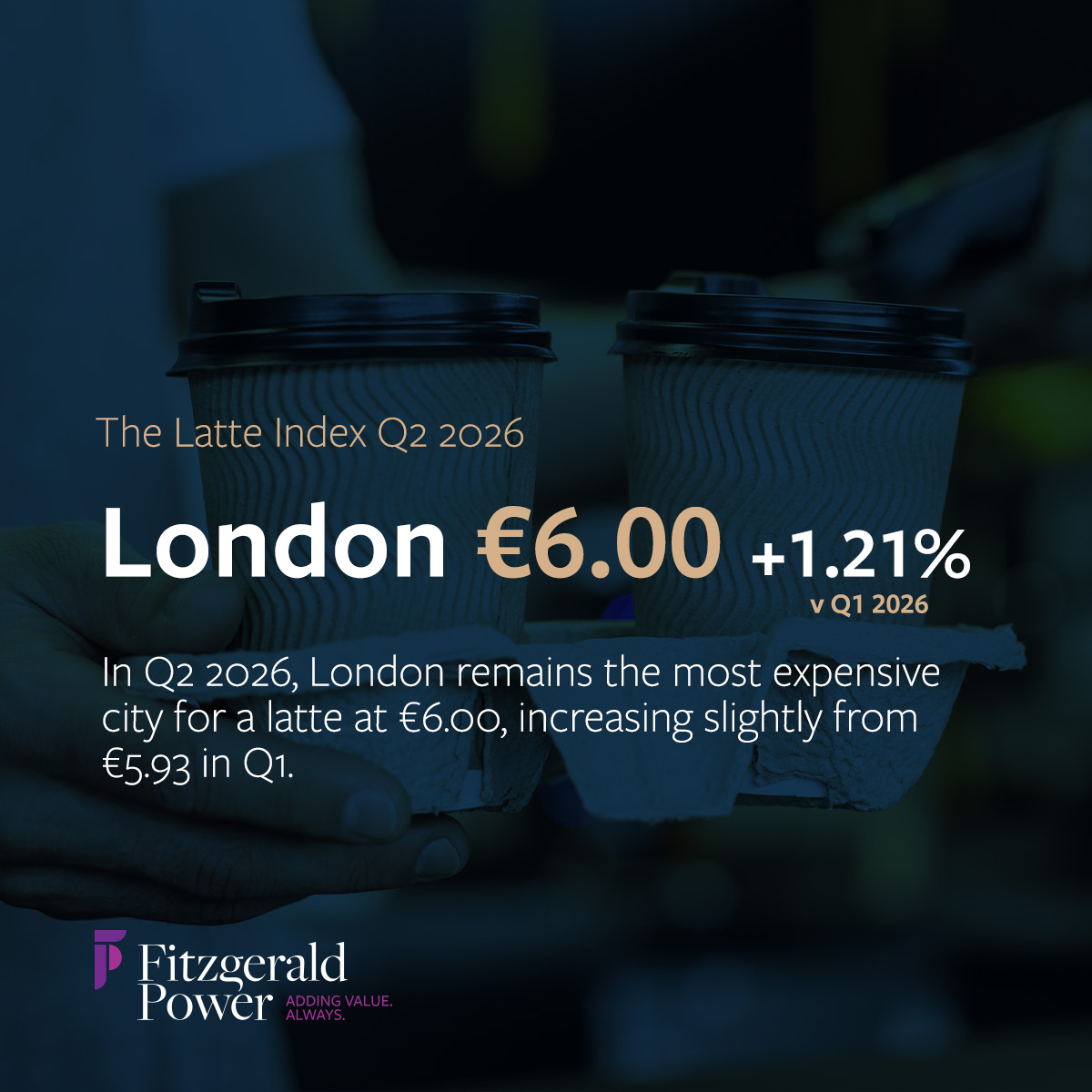
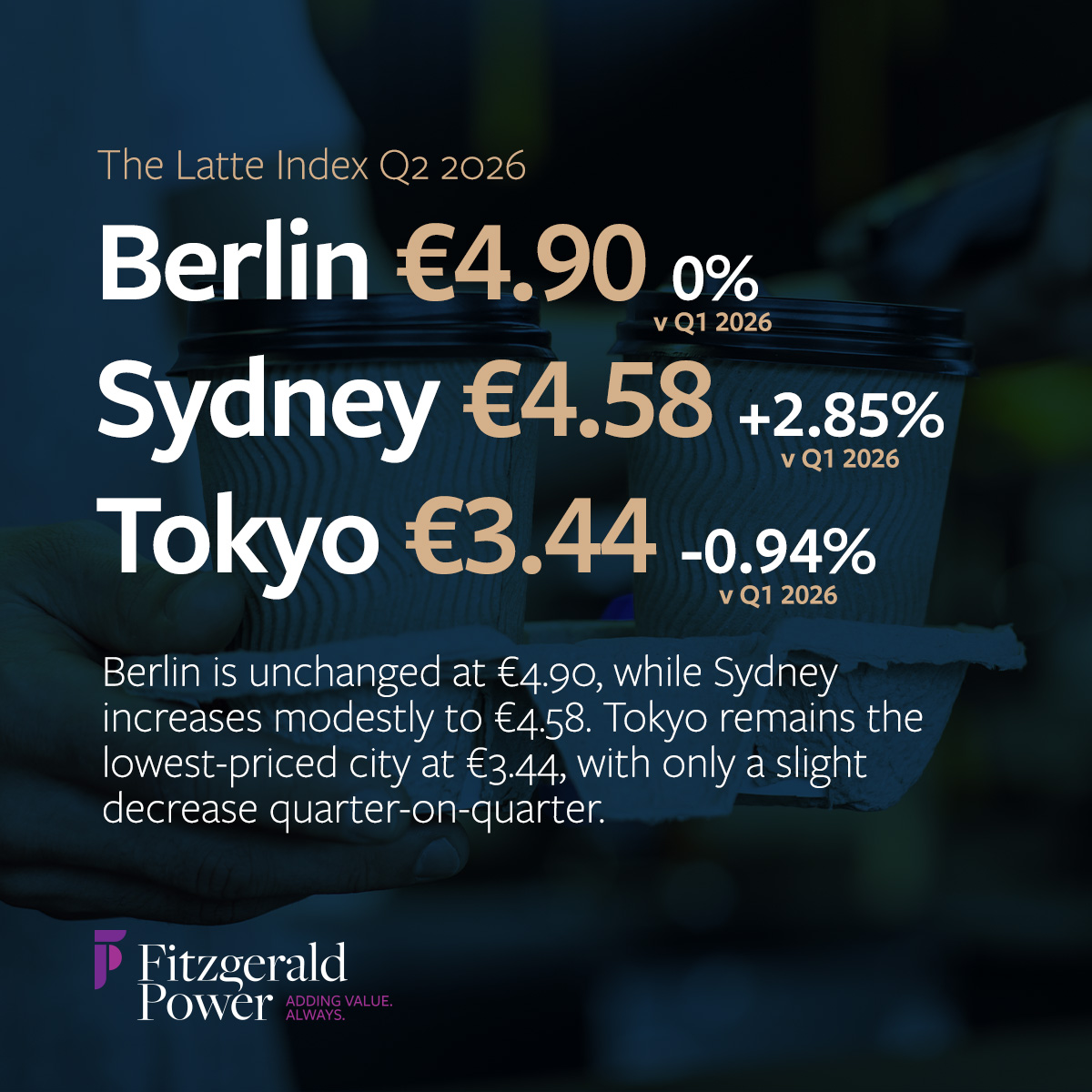
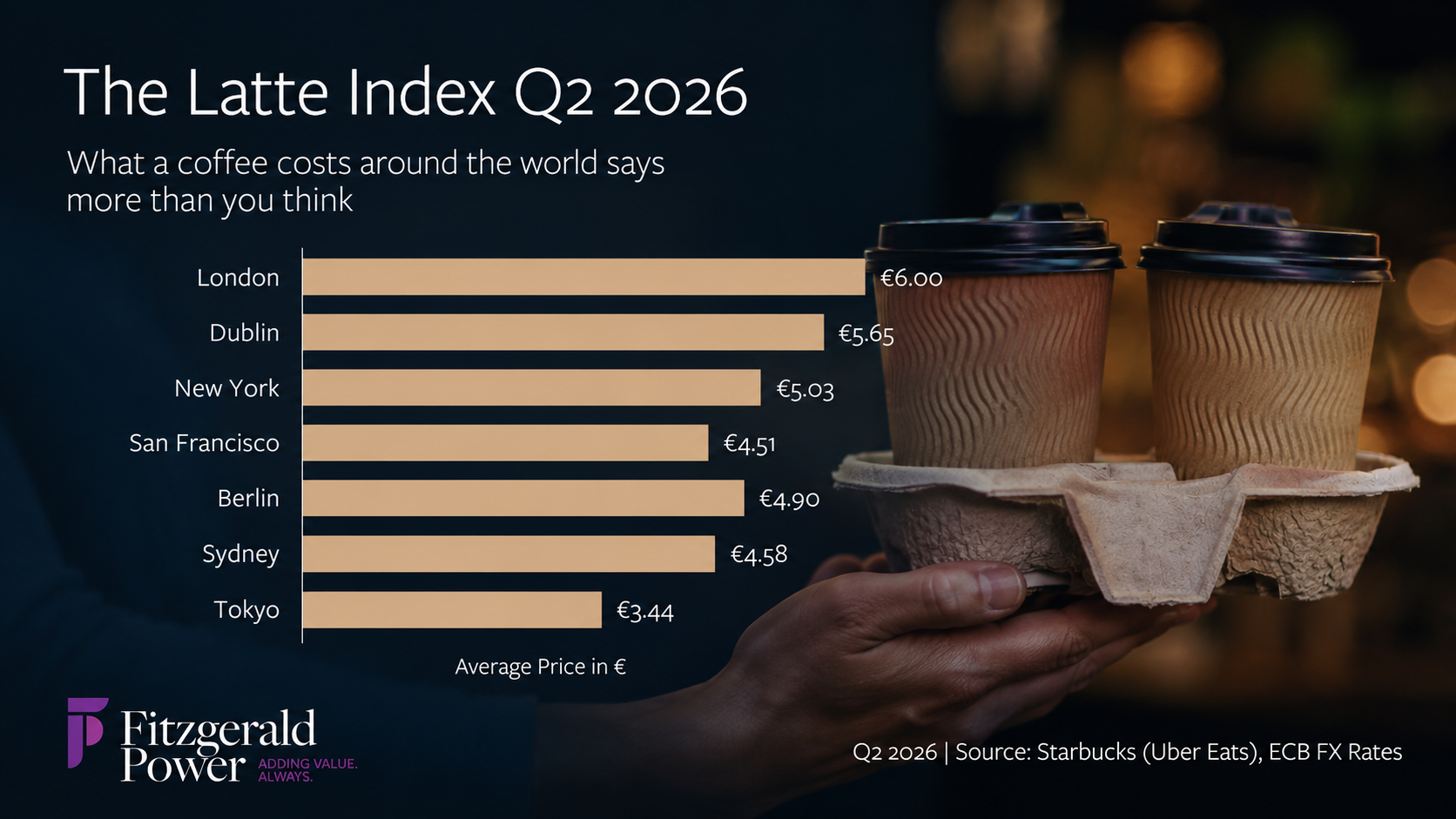
London remains the most expensive city for a latte at €6.00, nudging above the €6 mark for the first time, while Dublin holds steady at €5.65. Elsewhere, Berlin is unchanged, Sydney records only a modest increase and Tokyo remains comfortably the lowest-priced city.
The good news?
Your coffee probably didn’t get more expensive this quarter.
The bad news?
It didn’t get any cheaper either.
For businesses, that’s telling us something important.
The cost of coffee beans is no longer the biggest challenge. Labour, rent, insurance, utilities and operating costs continue to outweigh any easing in commodity prices. Businesses aren’t cutting prices because, quite simply, they still can’t afford to.
Dublin: Still Paying Global Prices
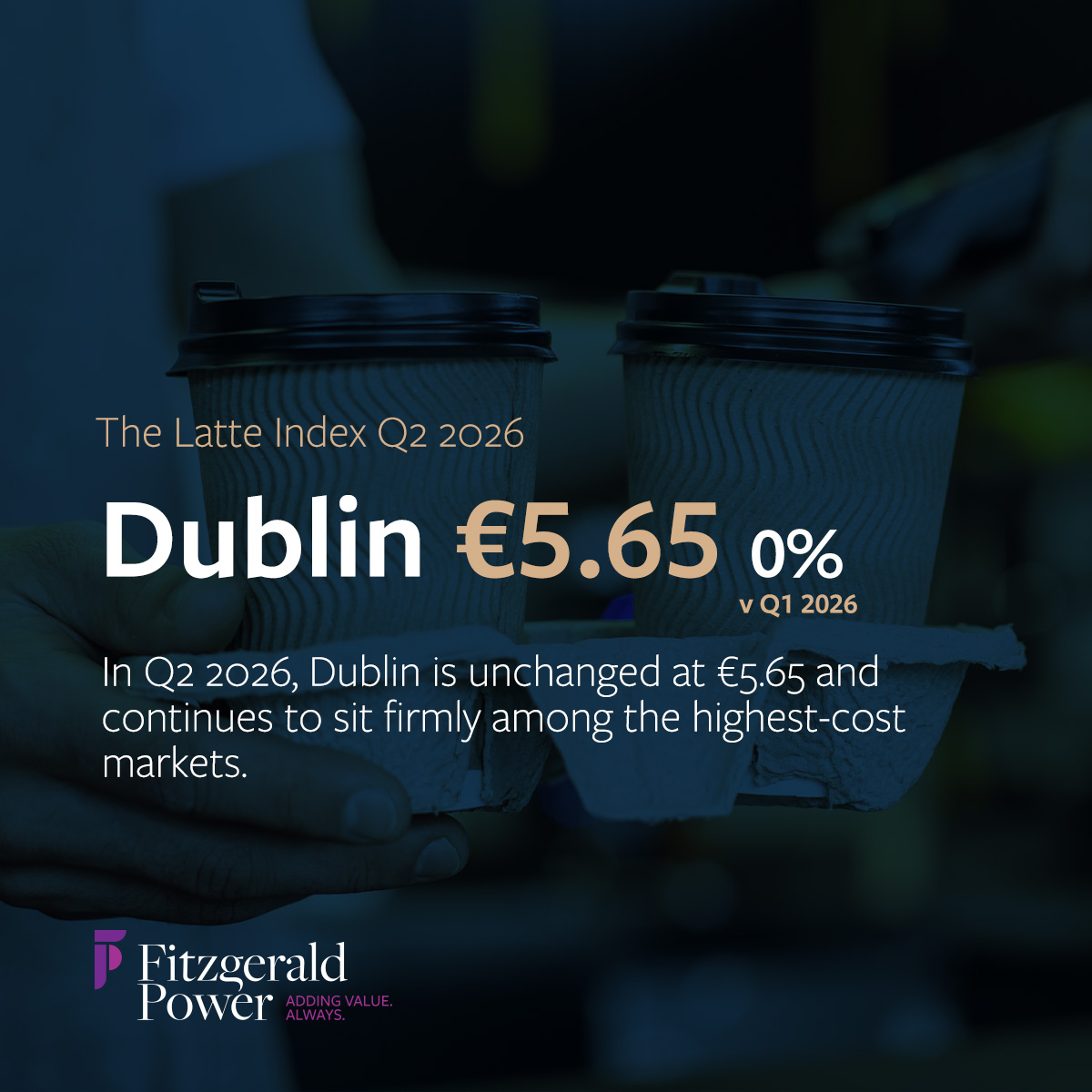
At €5.65, Dublin remains the second most expensive city in our index, sitting just behind London.
For a city of its size, that’s remarkable.
Dublin continues to price like a global capital, reflecting the significant cost pressures facing Irish businesses. Commercial rents remain high, wage costs continue to rise and strong consumer demand allows premium pricing to hold.
Or, put another way… It turns out we’re not just paying premium prices for housing.
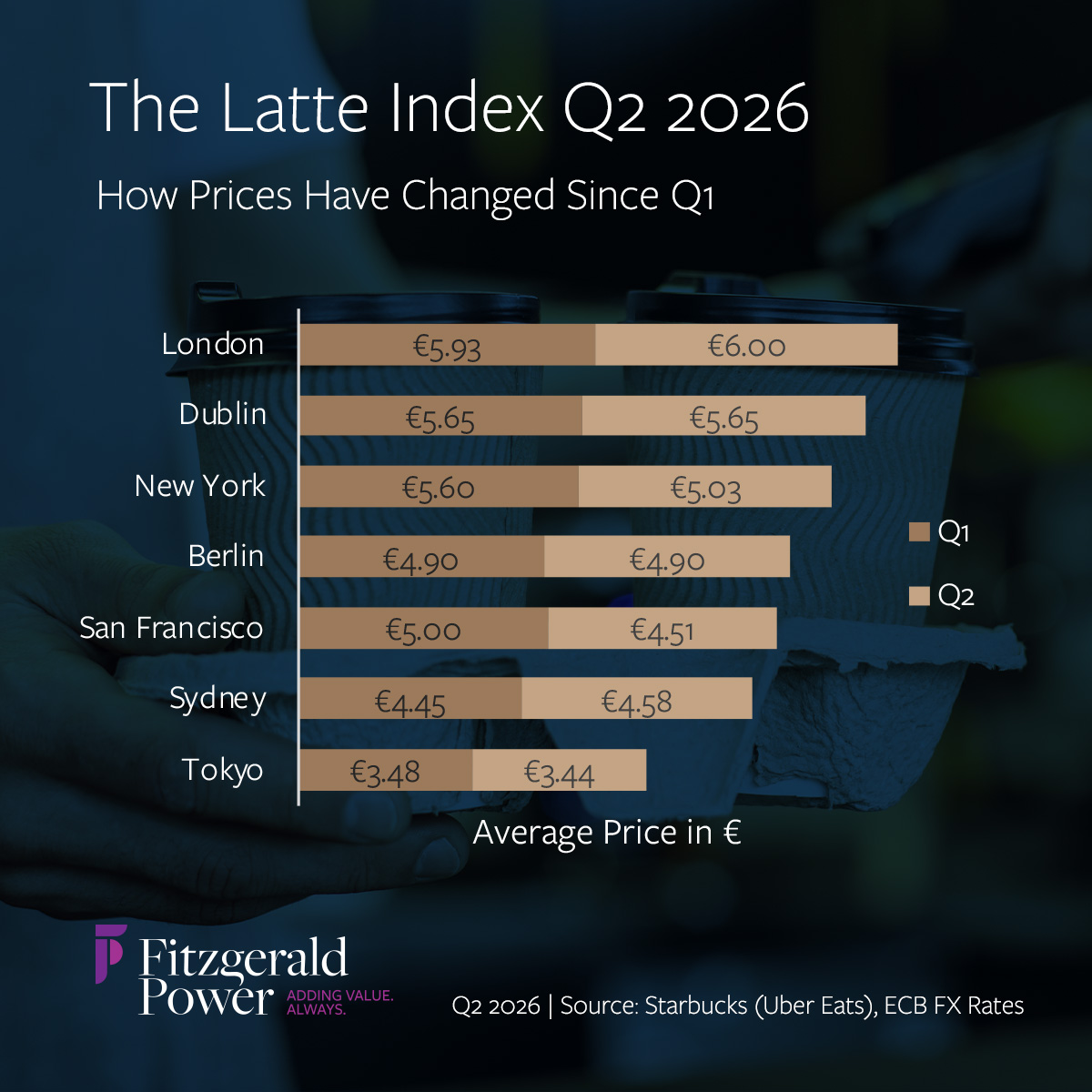
The consistency is perhaps the most interesting finding. Despite signs that global commodity prices have started to settle, Dublin’s average latte price hasn’t moved in two consecutive quarters.
That suggests businesses have very little room to reduce prices, even where some input costs begin to ease.
The US: The Quarter’s Biggest Surprise
If there was one unexpected development in Q2, it came from across the Atlantic.
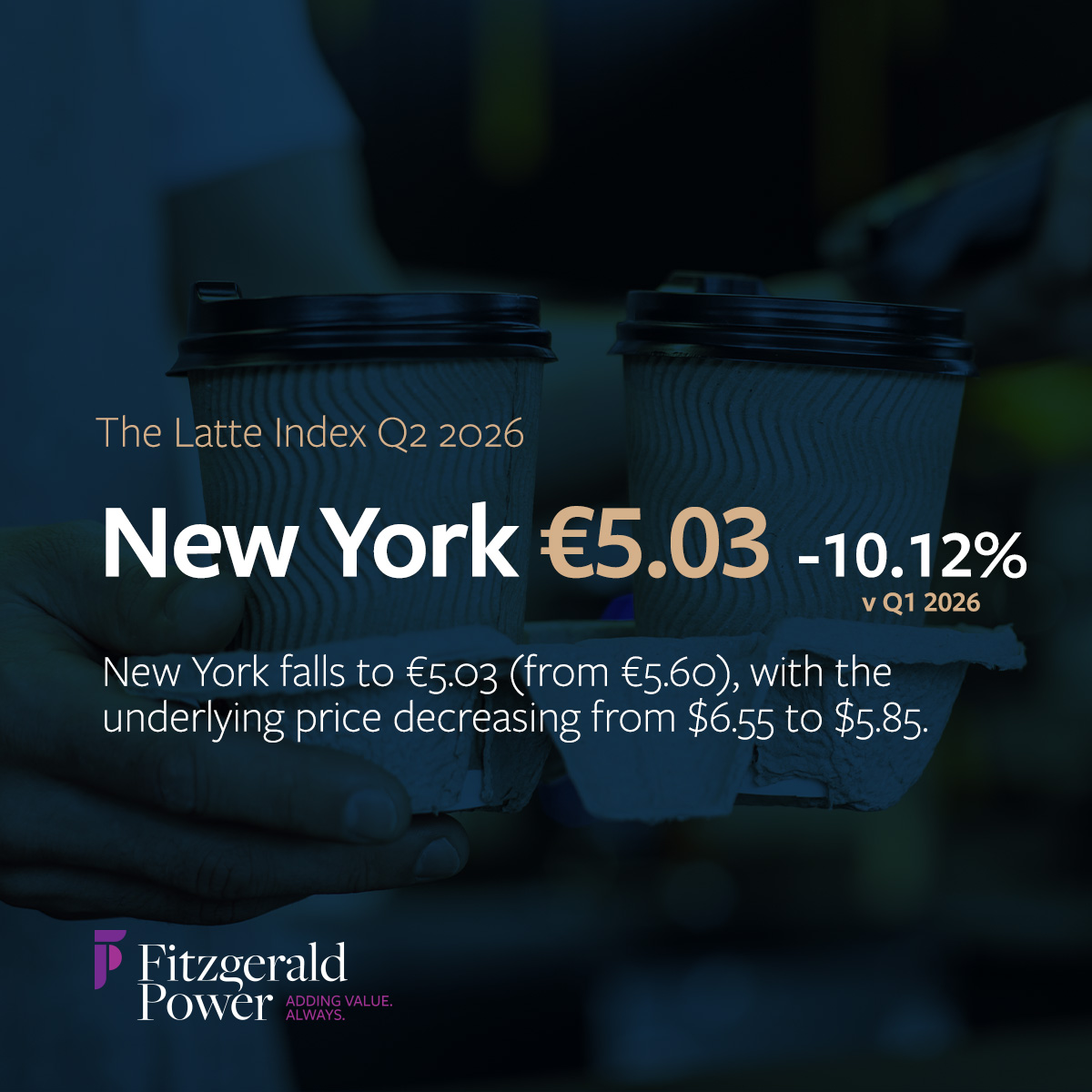
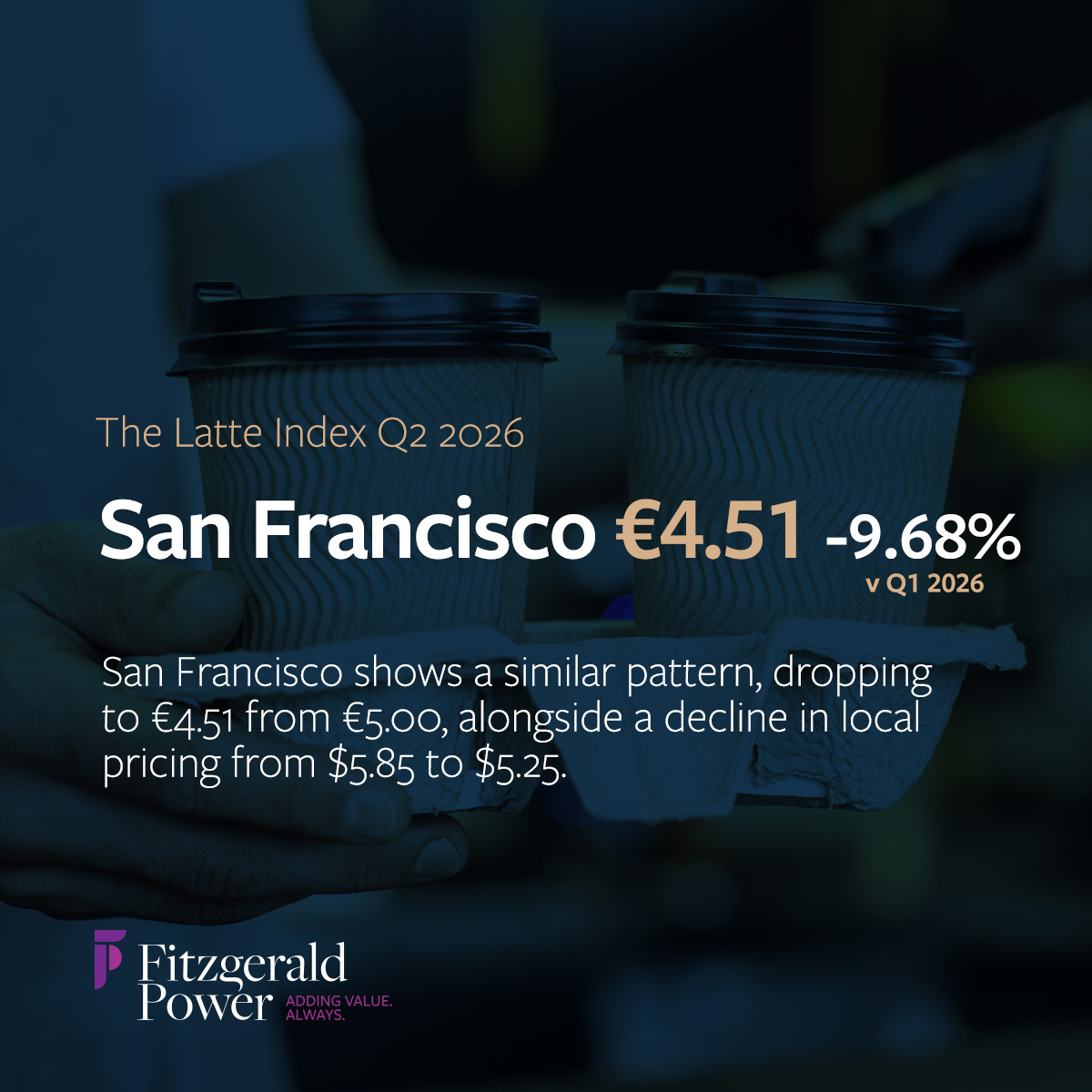
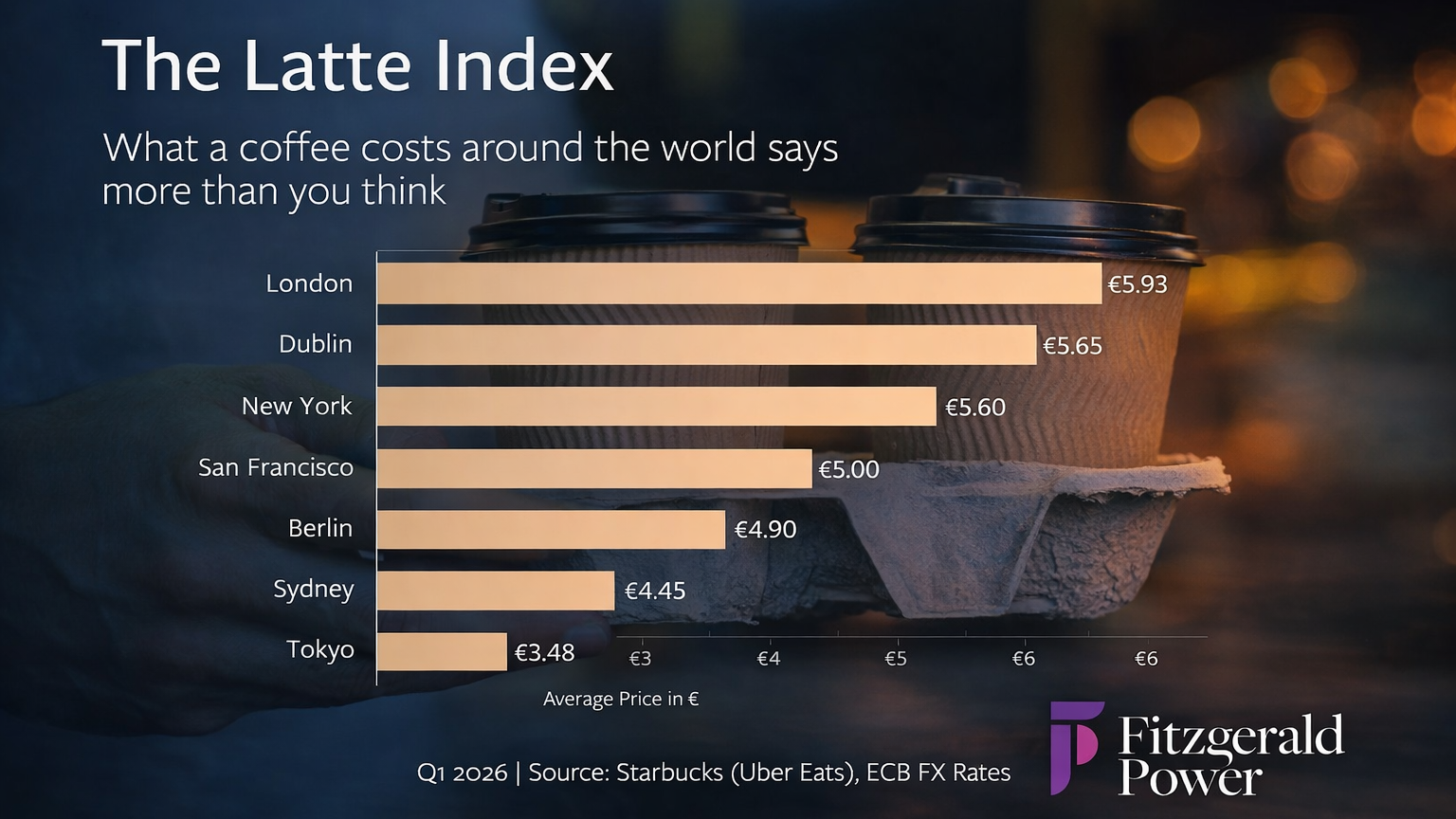
New York fell from €5.60 to €5.03, while San Francisco dropped from €5.00 to €4.51.
Importantly, those reductions are reflected in both euro and local currency, suggesting the movement isn’t simply the result of exchange rate fluctuations.
Before we all start booking flights for cheaper coffee, however, it’s worth exercising a little caution.
The Latte Index uses platform-based pricing, meaning quarter-on-quarter movements can sometimes reflect individual store pricing, promotional activity or platform dynamics rather than a structural shift across the wider market.
In other words, it’s an interesting signal – not yet a trend.
Local Costs Are Now Driving Prices
One of the clearest themes emerging from the Latte Index is that local operating costs now matter more than global coffee prices.
The disruption to coffee supply chains in Brazil and Vietnam pushed wholesale prices sharply higher over the past two years. Those increases have now largely worked their way through to consumers.
Today, the bigger challenge isn’t the coffee.
It’s everything that comes with serving it.
- Payroll.
- Rent.
- Energy.
- Insurance.
For many café owners, coffee beans have stopped being the biggest headache.
Everything else has politely stepped in to take their place.
That’s why cities such as Dublin and Berlin remain unchanged, London continues to edge upwards and Tokyo remains structurally cheaper thanks to its different labour and occupancy costs.
What This Means for Irish Businesses
While the Latte Index is intentionally light-hearted, the economic message behind it is serious.
The pressures facing cafés mirror those facing thousands of Irish businesses.
- Higher employment costs.
- Increasing commercial rents.
- Rising insurance premiums.
- Persistent operating expenses.
Many businesses are no longer increasing prices because costs are accelerating.
They’re maintaining prices because costs remain stubbornly high.
The result is a pricing environment where today’s “expensive” has quietly become tomorrow’s normal.
Consumers may not like paying over €5 for a coffee – but increasingly, they’re accepting it.
The real question is how long that acceptance lasts.
Looking Ahead
We’ll continue publishing the Fitzgerald Power Latte Index every quarter to see whether this pattern changes.
- Will easing commodity prices eventually find their way to consumers?
- Will businesses finally get some breathing room on operating costs?
- Or will today’s prices become the new benchmark?
We’ll be watching closely.
Because sometimes the clearest insight into the economy isn’t hidden in a 200-page report.
Sometimes it’s sitting in a cardboard cup beside your laptop.
About the Fitzgerald Power Latte Index
The Fitzgerald Power Latte Index tracks the price of a standard Starbucks Tall Latte across seven major international cities each quarter.
Prices are sourced via Uber Eats, converted to euro using European Central Bank exchange rates and analysed alongside local cost-of-living indicators to provide an accessible snapshot of consumer pricing and operating cost pressures.
While it’s not a formal measure of inflation, it offers a relatable perspective on how economic conditions are influencing everyday spending.